
Burst & Frozen Pipe Cleanup · Stamford

Burst and Frozen Pipe Cleanup for Stamford Connecticut Homes

When a pipe bursts or freezes, we answer the phone, pump out the water, and start drying your Stamford home the same day.

Free Quote

Free Burst & Frozen Pipe Cleanup quote.

We reply within 1 business hour. No spam, ever.

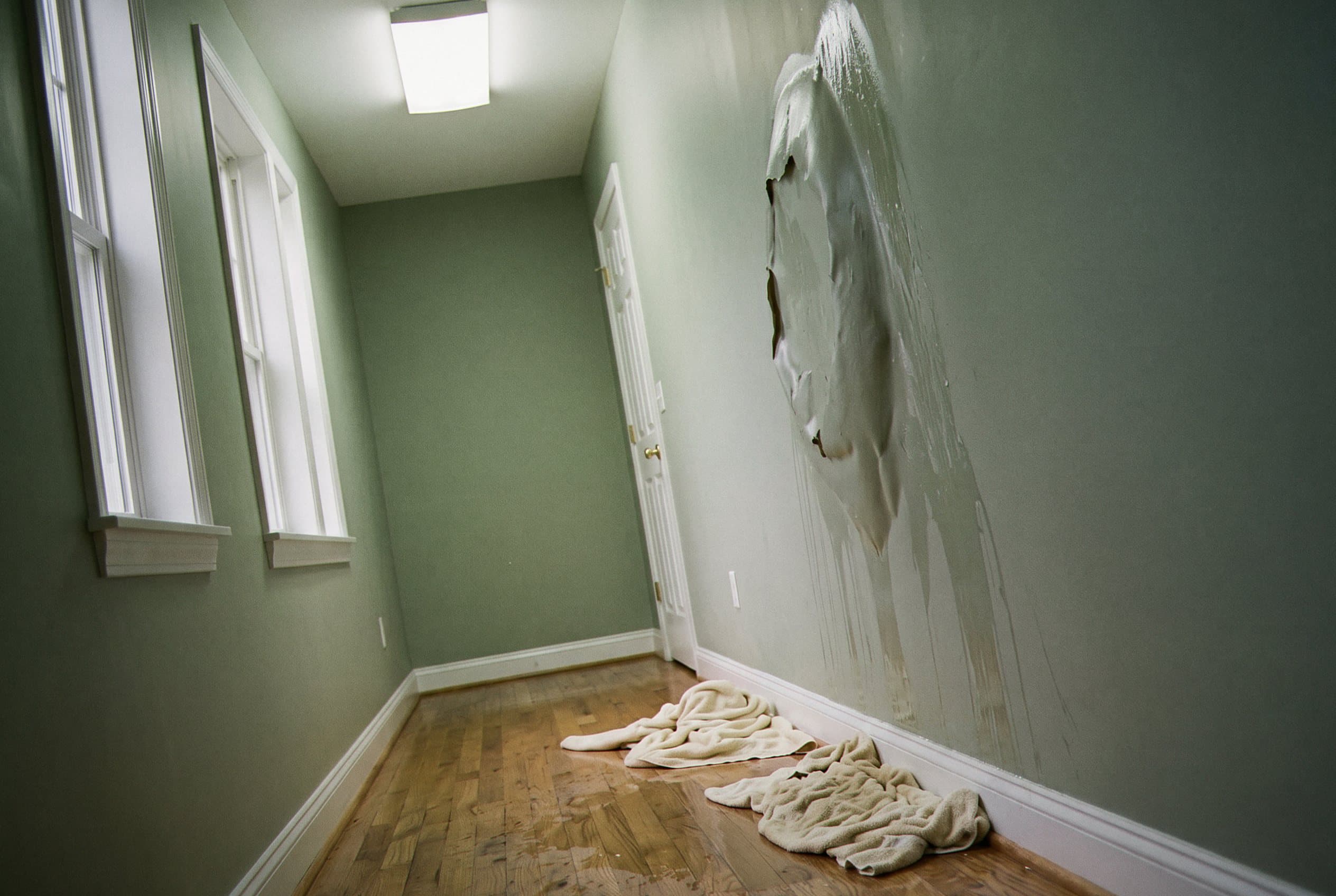
Water damage from burst pipe spreading across floor and walls
Visible water pooling and saturation from pipe burst
Drying equipment extracting and removing burst pipe water
What we do

We stop the water and dry your home

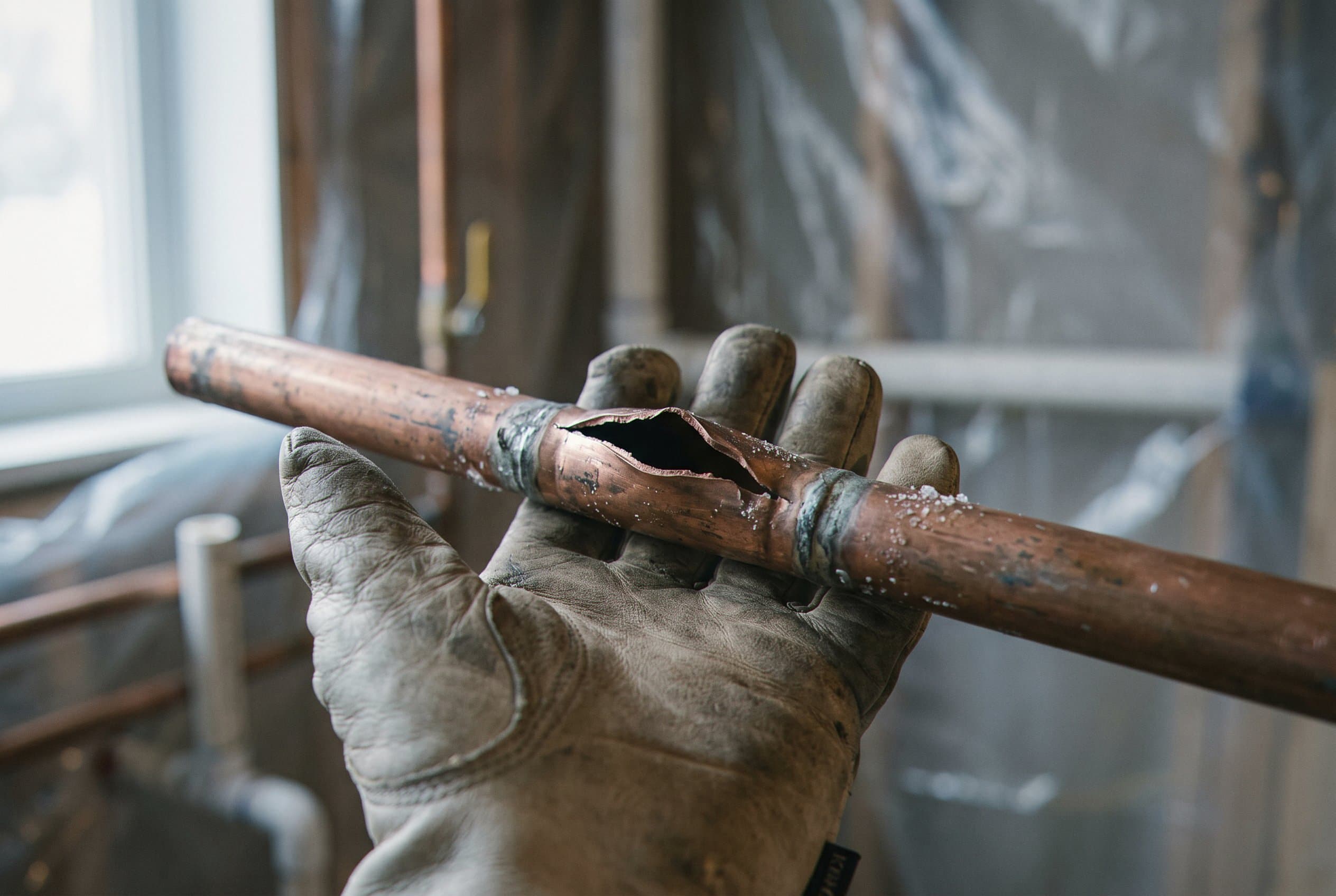
A burst pipe can flood a floor fast. In a hard Stamford freeze, the water lines that run through attics, crawl spaces, and along cold outside walls can freeze solid, swell, and split right at the weak point. The timing is the cruel part. A pipe often lets go overnight or while you are at work, so the water runs for hours before anyone notices. A frozen line is sneaky too, since it may hold while the ice stays packed and then burst the moment it thaws. By the time you walk in, it has soaked into drywall, baseboards, cabinets, and the subfloor, and it keeps creeping toward rooms that were still dry. Soaked insulation and warped trim follow close behind. Mold can take hold within a day. We get there fast, find the source, shut the flow, and stop the spread, then move straight into water extraction and drying.

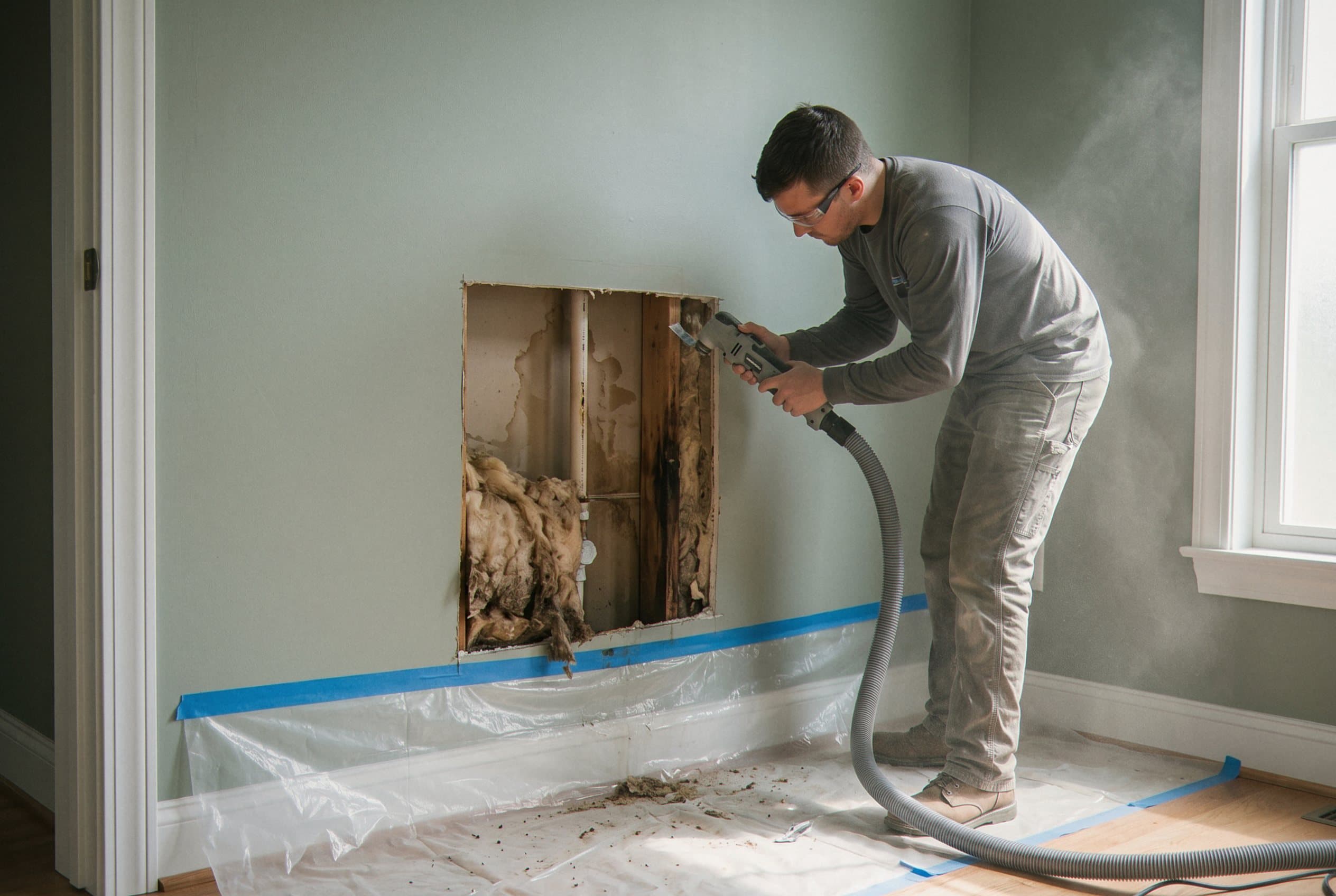
Our first move is to shut the water at the main valve. Then we trace the burst back to the line that failed, whether it sits behind a wall, under a slab, or up in a cold attic. Speed matters here. Next we pump out the standing water with truck mounted extractors and smaller units that reach tight basement corners and finished lower levels. We pull up soaked carpet and padding, lift wet baseboards, and open wall cavities so damp air does not sit trapped behind fresh paint. We also check behind cabinets and under the flooring with meters, because the water you cannot see is the water that rots a subfloor. Then we set air movers and dehumidifiers in a pattern matched to the room and the type of floor. Each day we read the framing and subfloor until they hit a true dry standard, not a guess. We log every reading and photo so you, and your insurance, can see the home really dried out.

  • Fast same day response when a pipe bursts anywhere in your Stamford home.
  • We trace the leak back to its source and stop the water from spreading.
  • Truck mounted extraction pulls standing water from floors, padding, and open wall cavities.
  • Air movers and dehumidifiers dry your framing and subfloor to a verified number.
  • Daily moisture readings you can see, so the home dries fully before any repairs.
When a pipe lets go in the middle of a Stamford winter, we answer fast and dry it right.

We live and work in lower Fairfield County. So when you call from Stamford, Springdale, Glenbrook, or Shippan, we already know the streets and the older homes that tend to freeze first. A lot of houses here have full basements and finished lower levels, which is exactly where a burst line does the most costly damage. We have dried out classic colonials near Cove Island, capes up in North Stamford, and condos closer to downtown. We have pulled water out of homes near Mill River Park and answered calls before dawn during a January cold snap. We treat each home like it was our own. We also cover the towns nearby, from Darien and New Canaan to Norwalk and Greenwich, so one hard freeze across the area never leaves you waiting days for help. When you call, you reach our crew, never a phone tree three states away. We answer plainly, give you a real arrival window, and then we show up and do the work.

A burst pipe only gets worse the longer the water sits inside your walls and floors. Call now and our Stamford crew will start water removal and drying today, often within hours. One call gets the cleanup moving and keeps a small split from turning into a full renovation.
Materials

The gear we bring on a burst pipe call

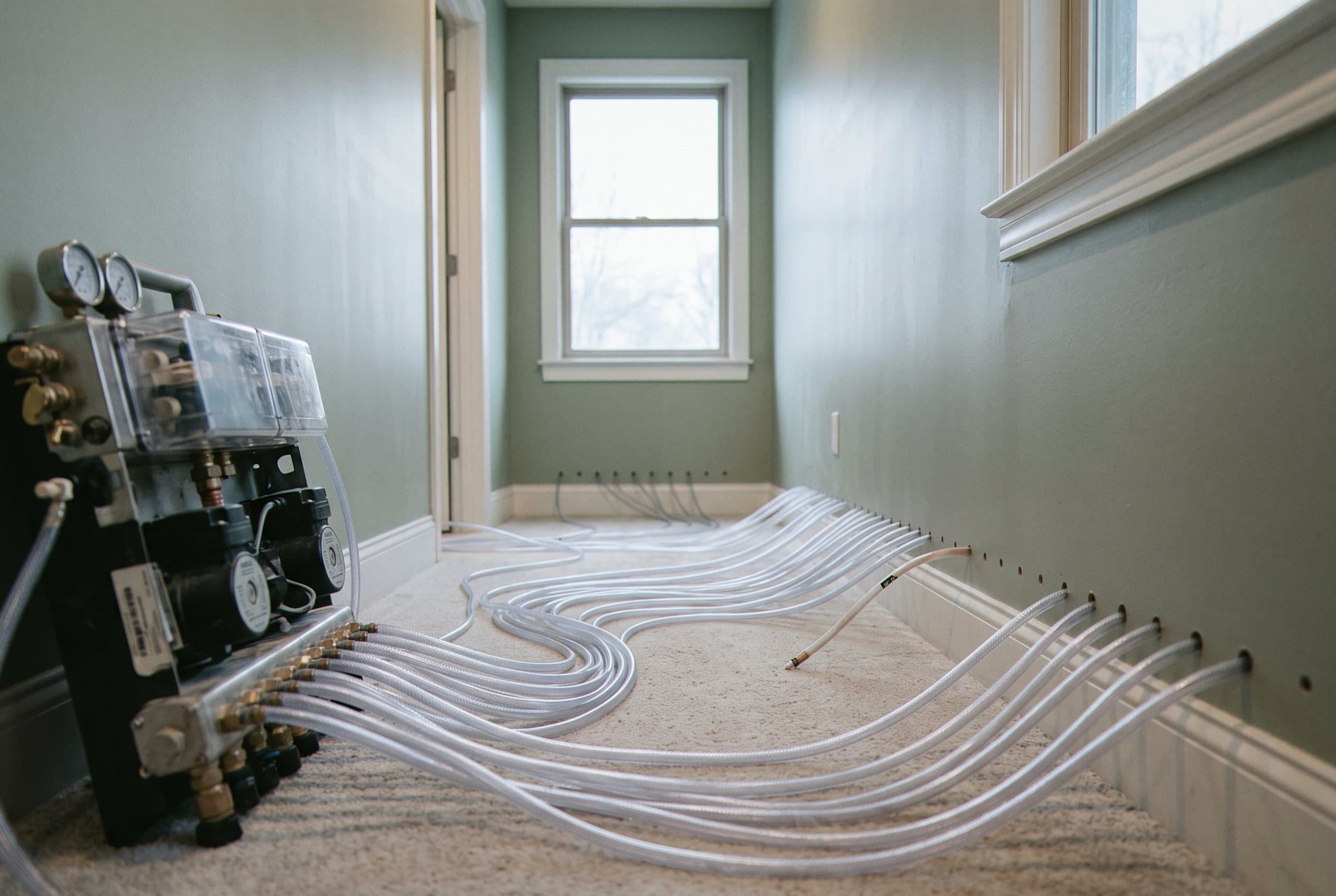
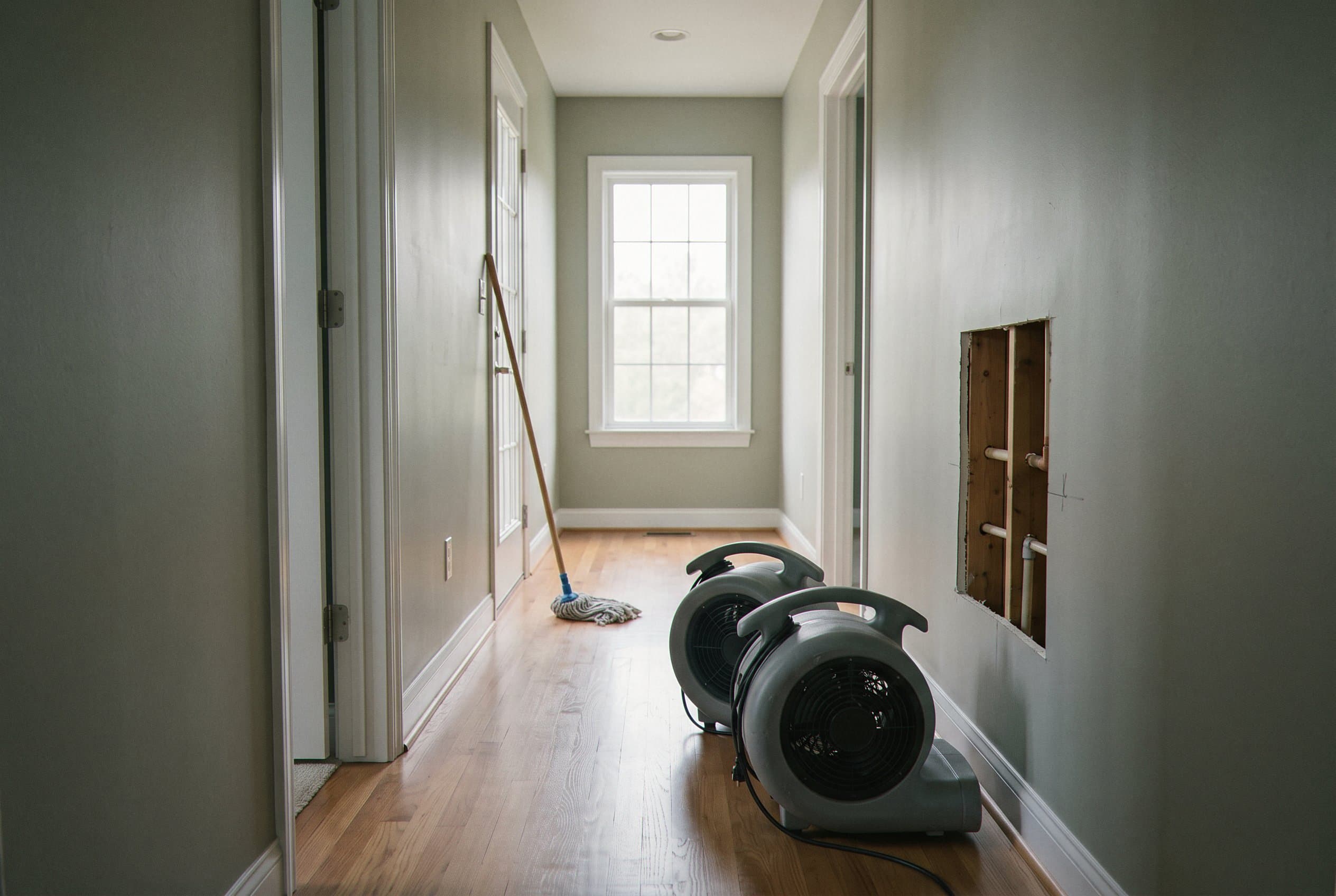
Every burst pipe call starts with water on the floor, so the first tools off the truck are the ones that move water fast. We run truck mounted extractors for the volume, and we bring portable units for tight spots like the back corner of a finished basement or the step down into a sunken family room. Wet carpet gets a weighted head. It presses the water up out of the padding while a squeegee wand clears the hard floor nearby. Where the water pushed under a wall, we drill small ports low on the drywall and dry the cavity from the inside with hoses, which saves the wall in a lot of homes. Hardwood is its own puzzle. We can set mats right on the boards and pull the water up through the grain, and that often saves a floor you had already written off.

Once the standing water is gone the job becomes a drying job, and drying runs on airflow, heat, and the right count of machines. We set air movers to sweep the wet surfaces and pair them with dehumidifiers sized to the space, not to whatever is left in the van. The math for that comes from the IICRC S500 standard, which tells us how many units a room of that size and wetness really needs. Then we measure. A pin meter reads the studs and the subfloor, a pinless meter sweeps a wide area fast, and a thermal camera shows the cool damp shadow of water behind a finished surface. We take those readings the first day and every day after. When the numbers match dry wood in a room the water never reached, the structure is dry and the machines come out.

  • Truck mounted extraction for volume, plus portable units for tight basement corners.
  • Wall cavity drying through small ports low on the wall, so the drywall stays.
  • Machine count set by room size, floor type, and how wet the material reads.
  • Pin meters, a pinless meter, and a thermal camera prove the dry.
Technician operating extraction equipment after pipe rupture
Floors dried and restored following burst pipe cleanup
What about the alternatives?

Your options after a pipe lets go

Not every wet floor needs the same answer. Here is how the common choices tend to play out in a Stamford home, and where each one helps or hurts.

Full extraction and monitored drying by our crew

We pump the water out, open only what has to be opened, set the machines, and read the moisture every day until the framing and subfloor hit a real dry number. It starts with a phone call. It is also the only path that ends with proof the house actually dried.

Recommended

Plumber first for the pipe, then us for the water

A fine order, and often the right one. Get the line repaired so the flow stops for good. Just call us the same day, because the clock on wet drywall and swelling wood starts the minute the water lands.

Acceptable

Do it yourself cleanup on a small clean water spill

If a supply line let go, you caught it in minutes, and the water sat on tile with nothing porous nearby, a shop vac and fans can be enough. Watch the baseboards and the wall behind them for a week. Any musty smell means it traveled further than you saw.

Acceptable

A rented dehumidifier and box fans from the hardware store

Better than nothing on a small area. The trouble is capacity and aim. A household unit pulls a fraction of what a restoration dehumidifier pulls, and fans blowing at random push damp air into rooms that were still dry.

Acceptable

Closing the wall back up and painting over the stain

This hides the problem and feeds it. Soaked insulation and damp framing behind fresh paint stay wet for weeks. That is how a small split in a copper line turns into rot and mold that costs far more to undo.

Skip

Waiting to see whether it dries on its own

Air alone does not move enough water out of a soaked subfloor in a closed up New England house, least of all in winter with every window shut. Each day you wait widens the wet zone and raises the odds of mold.

Skip
How it goes

From quote to walk-on, fast.

01

Your inquiry

Call or send the short form with what is going on at your place. A sentence or two is plenty for the first step.

02

We talk it through

We go over the situation on the phone, ask the questions that matter, and tell you what we would do next.

03

A clear plan

You get a plain-language rundown of the work, the order it happens in, and what to expect on the day.

04

The work gets done

Our crew shows up when we said, does the job, and walks you through the result before leaving.

Before you book

The honest answers to what people ask us first

When your floor is under water you want straight answers, not a pitch. These are the questions we field most on burst pipe calls around Stamford, answered the way we would answer them standing in your kitchen.

How fast can you get here?
We move on burst pipe calls the same day, and often within hours. Tell us where the water seems to be coming from and whether you found the main shutoff. If you have not found it, we will walk you through it on the phone while our crew is on the way. Stopping the flow early is the single biggest thing that limits the damage.
Do you have to tear out my drywall?
Not always, and we try hard not to. Where a wall cavity can be dried through small ports, we do that instead of cutting. Where the insulation is soaked through, or the water was dirty, that material has to come out. We show you the meter reading behind the call, so you are not taking our word for it.
How long does the drying take?
Most homes run three to five days on the machines. Wet plaster, thick subfloor, and hardwood take longer. What sets the end date is the moisture reading, never the calendar. We keep the equipment running until the wet material reads the same as dry material in a room the water never reached.
Will you fix the pipe itself?
Our work is the water. We shut the flow, find the failure point, and open access so the repair is easy to reach. A plumber then makes the pipe sound again while we handle the extraction and the drying. The two jobs run side by side, and neither one waits on the other.
Can we stay in the house while you dry it?
Usually yes. The machines are loud and the rooms get warm, but most families stay put. If sewage backed up, or if the wet area covers the only bedroom, we will tell you plainly that it is better to sleep elsewhere for a few nights. We would rather say it than have you learn it at midnight.
What about my insurance claim?
We document as we go. Photos before we touch a thing, a moisture map of the wet zone, daily readings, and a written scope of what we did and why we did it. Your adjuster wants exactly that. We hand it over so the claim rests on measurements instead of memory.
Aftercare

Keeping the next Stamford freeze from doing it again

Most of the pipes we see split sit in the same few places. A line running through an unheated garage, a supply pipe in a crawl space, a run along an outside wall in an older colonial, or the outdoor faucet that still has a garden hose on it in December. Cold air finds those spots first, and a January night in lower Fairfield County gives it plenty of time to work. A little fall work costs you one afternoon and takes most of that risk off the table. Here is what we tell every homeowner once we pull the machines out.

  • Find your main water shutoff now, and be sure everyone in the house can work it in the dark.
  • Pull the garden hoses off before the first hard freeze.
  • Close the valve that feeds each outside faucet, then open the faucet itself to let the line drain.
  • Wrap the pipe runs in the garage, the crawl space, and any unheated attic bay with foam sleeves.
  • Leave the heat at 55 or higher when you travel in winter.
  • Open the cabinet doors under sinks on outside walls, and let one far faucet drip through a deep cold night.
Water damage from burst pipe spreading across floor and walls
FAQ

Burst Pipe Cleanup Questions, Answered

How fast can you get to my Stamford home?
Our line is open at any hour. A minute promise is easy to make and hard to keep once a coastal storm has half of Fairfield County calling the same afternoon, so instead we tell you when a crew is actually leaving, and stay on the line long enough to get your water shut off.
What can I do before the crew arrives?
Close the main valve if you can get to it dry. Do not go near the electrical panel, or any outlet that is under water. Take photographs of every room before anything is moved, and get anything wooden up off wet carpet, because the finish bleeds into the pad and that stain does not come out.
Do you handle the insurance side?
We build the documentation your adjuster is going to ask for: moisture readings recorded daily, photographs by room, and a written scope covering what was removed and what was dried. We deal with the adjuster directly. Whether the loss is covered is a question only your carrier can answer, and we do not guess at it for you.
How many days does drying take?
Usually three to five. Plaster and the heavy old framing in a lot of Stamford's colonials give up water slowly, so those sometimes go longer. We are not guessing at it. We meter the wood and the drywall every day, and the equipment stays until those numbers reach the IICRC dry standard.
Should I be worried about mold?
The clock on that is roughly 24 to 48 hours from when the material got wet. Beat it and you almost always avoid mold entirely. That is why we would rather set equipment at nine at night than first thing tomorrow.
Ready when you are

Let's make your next steps easier

Tell us what is going on at your Stamford home and we will walk you through the options. One call or one short form is all it takes.

Call (475) 268-8890Make your inquiry
CallContact us